For most of human history, trusted institutions and cultural norms provided shared frameworks for determining what counted as true. Today, young people inhabit a very different landscape. Social media, political polarization, artificial intelligence, and the unprecedented availability of information have created a world in which nearly every claim is challenged by another. Rather than receiving a single map of reality, students are asked to navigate an increasingly chaotic marketplace of competing truths.
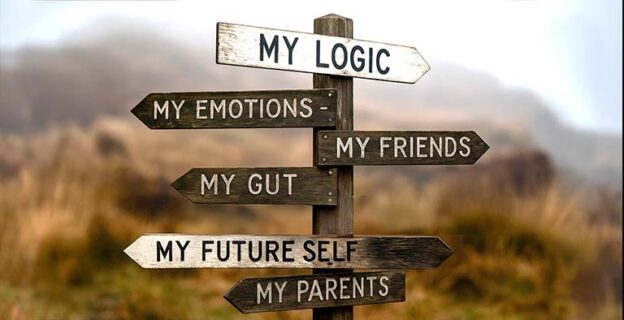
This course approaches that challenge by expanding rather than narrowing students’ understanding of knowledge. We examine the many sources from which human beings have drawn insight: rational inquiry, scientific investigation, personal experience, intuition, dreams, sacred texts, community traditions, trusted mentors, artistic expression, and symbolic imagination. Each is explored with curiosity and humility, asking what kinds of truth it reveals, where it succeeds, and where it reaches its limits.
Some of this course’s richest conversations emerge when these ways of knowing disagree. What happens when scientific evidence points one way while intuition points another? When family traditions conflict with personal experience? When the heart, the mind, and the surrounding culture each insists on a different truth? Rather than offering formulas for resolving these tensions, students learn to inhabit them thoughtfully, recognizing that wisdom often arises through dialogue among multiple ways of knowing rather than unquestioning allegiance to any single one.
Ultimately, Finding Your Own Truth is a course in discernment. Students leave with a broader understanding of how knowledge is created, greater awareness of the assumptions that shape their own thinking, and practical tools for remaining intellectually honest in an age of information warfare. In a world where countless voices compete for our attention and allegiance, one of the most important educational tasks is learning what paths to truth are trustworthy.